Could Should Might Don't
Nick Foster
Turn its ideas into short, game-like lessons you’ll actually finish.
About Could Should Might Don't
An invaluable guide for how to think—and not to think—about the future, from one of the leading futurists of our time.
You might not know the name Nick Foster, but after just a moment of googling you’ll realize he’s been guiding the missions of companies that have been shaping the world you live in. From Sony, Nokia, and Dyson to Google itself, where he was the head of design at Google X, Foster has been at the forefront of innovation for over twenty-five years, but his name might be unfamiliar because until this point, he’s been hidden behind countless NDAs.
Could Should Might Don’t is Foster’s public debut, the first time this much-sought-after designer is free to share his perspectives, explore how other people approach the future, and suggest how we can all improve our thinking about what might lie ahead. But this isn’t a book filled with predictions and prophecies, and it makes no assertions about what the future will hold. It’s a book that unpacks how we think about the future.
Foster has identified Could, Should, Might, and Don’t as the four primary mindsets we all adopt when thinking about what’s over the horizon, but he doesn’t advocate for any one of them. Instead, he explores how humanity has grappled with the concept of the future throughout history, tracing the emergence of distinct schools of thought and exploring the virtues, blind spots, and inevitable shortcomings of each. The book is, in some ways, about the history of the future and the history of the different futures that we have imagined, designed, or projected for ourselves.
But most of all, Could Should Might Don’t is a no-nonsense appeal to every one of us—whether we’re busy creating future ideas or trying to understand them—to radically improve how we think about the future, so we can improve what we leave behind for those who will follow.
A smarter reading
and learning experience.
Hooked from page one.Every lesson opens on a question you want to answer, so your mind stays on it instead of drifting off.
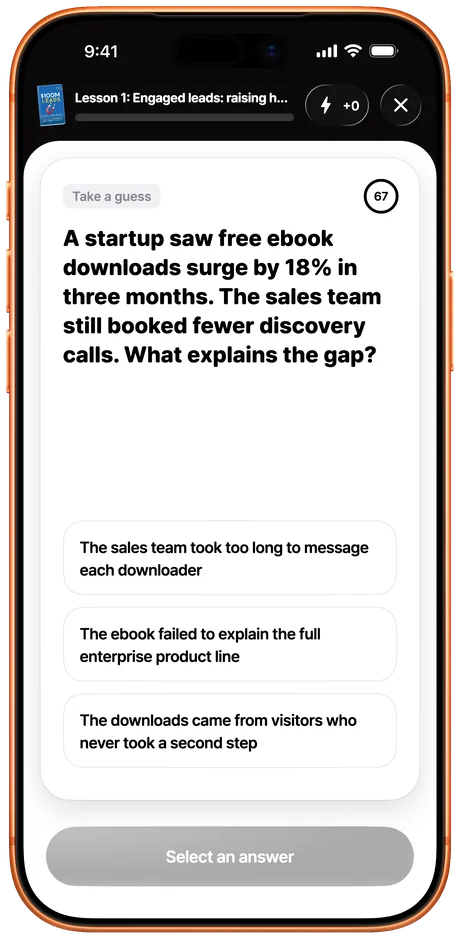
Get it in seconds.Right after you answer, a few plain words show why. No dense chapters to push through.

Use it this week.Pick the moment you’ll use the idea in your own life, so it turns into a habit, not a highlight.
Questions about Could Should Might Don't
What is Could Should Might Don't about?
An invaluable guide for how to think—and not to think—about the future, from one of the leading futurists of our time. You might not know the name Nick Foster, but after just a moment of googling you’ll realize he’s been guiding the missions of companies that have been shaping the world you live in.
Who wrote Could Should Might Don't?
Nick Foster wrote Could Should Might Don't.
Is there a summary of Could Should Might Don't?
MEMRBL doesn’t summarize it. It turns its ideas into short lessons on your iPhone: you guess first, see why, and plan where you’ll use each idea this week.
How do I remember what I read in Could Should Might Don't?
Answer questions about it instead of reading it again. Recalling an idea makes it stick better than rereading it (Pan and Sana, 2021). That is how every MEMRBL lesson works.
What books are like Could Should Might Don't?
Superforecasting, The Signal and the Noise and The Black Swan. See all books like Could Should Might Don't.
Books like Could Should Might Don't
See all




Explore more books
Put Could Should Might Don't to work.
Short lessons on your iPhone. Free to download.