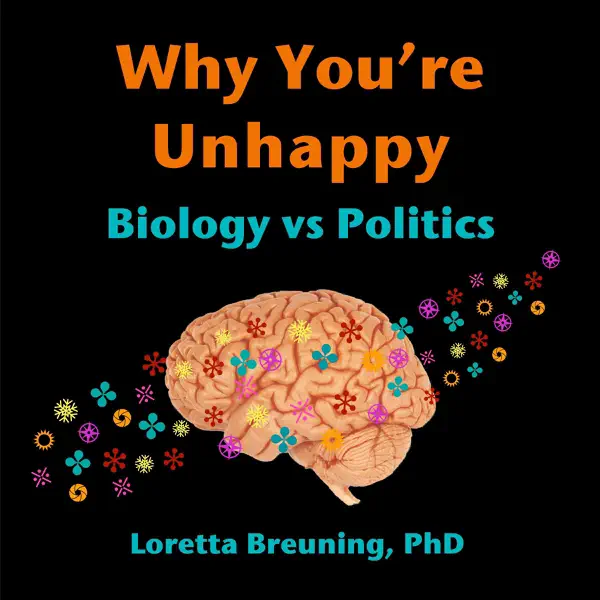
Why You're Unhappy
Loretta Graziano Breuning
Turn its ideas into short, game-like lessons you’ll actually finish.
About Why You're Unhappy
Unhappiness is our brain’s natural default state, but we’re taught that happiness is “normal.” This makes your natural ups and downs seem like a disorder. It suggests that others are happy and you are missing out. And it diverts you from building skills that would actually spark your happy brain chemicals.
Why are we getting such bad information about our biology?
It’s politics. Not politics in the sense of electing leaders, but politics in the sense of winning support by saying what’s popular.
Doctors, therapists, academics, and the media win support by saying what Rousseau said: that nature is happy and “our society” causes unhappiness. You are taught that animals, children and hunter-gatherers are happy, and you would be too if “our society” hadn’t messed things up.
You may like this in the short run because it makes unhappiness “not your fault.” But it’s profoundly disempowering in the long run. It makes you a helpless victim of external forces and ignores your power to build brain-management skills.
And it’s not true. This book shows that animals, children and hunter-gatherers are unhappy a lot. It shows why medicine, academia, therapy, and the media ignore the fact that our happy chemicals are not designed to be on all the time. When you know why our brain produces unhappiness, you can stop feeling broken and expand the happy moments that our brain is capable of.
It’s hard to question the popular view of happiness because you’re told that it’s THE Science. You risk being labeled an anti-science nut if you question it. But life is short. Every minute you ignore your power over your brain is a minute less you have to be happy. You can blaze new trails to your happy chemicals now instead of waiting for society to make you happy. You can spark more dopamine, serotonin, and oxytocin in healthy ways when you know the job these chemicals are designed to do.
This book gives you the biology that politics has obscured so you can rewire yourself to feel good now.
A smarter reading
and learning experience.
Hooked from page one.Every lesson opens on a question you want to answer, so your mind stays on it instead of drifting off.

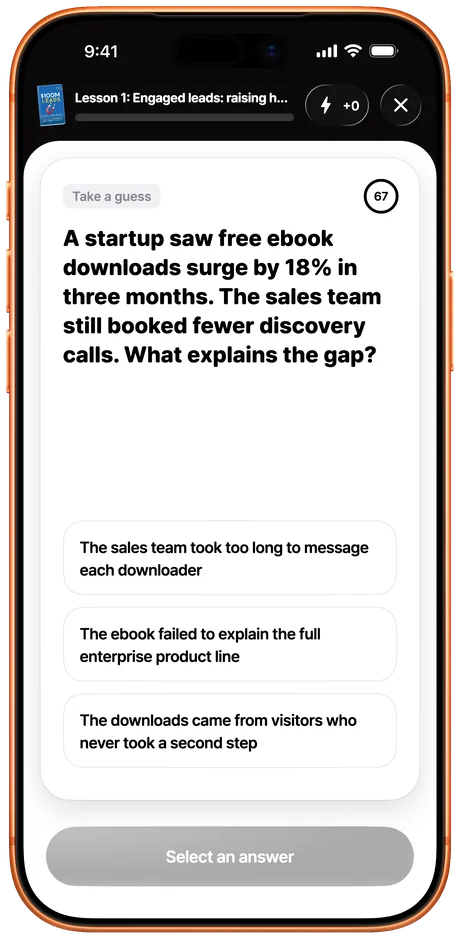
Get it in seconds.Right after you answer, a few plain words show why. No dense chapters to push through.

Use it this week.Pick the moment you’ll use the idea in your own life, so it turns into a habit, not a highlight.
Questions about Why You're Unhappy
What is Why You're Unhappy about?
Unhappiness is our brain’s natural default state, but we’re taught that happiness is “normal.” This makes your natural ups and downs seem like a disorder.
Who wrote Why You're Unhappy?
Loretta Graziano Breuning wrote Why You're Unhappy.
Is there a summary of Why You're Unhappy?
MEMRBL doesn’t summarize it. It turns its ideas into short lessons on your iPhone: you guess first, see why, and plan where you’ll use each idea this week.
How do I remember what I read in Why You're Unhappy?
Answer questions about it instead of reading it again. Recalling an idea makes it stick better than rereading it (Pan and Sana, 2021). That is how every MEMRBL lesson works.
What books are like Why You're Unhappy?
Emotional Agility, Learned Optimism and Dopamine Nation. See all books like Why You're Unhappy.
Books like Why You're Unhappy
See all


Explore more books
Put Why You're Unhappy to work.
Short lessons on your iPhone. Free to download.