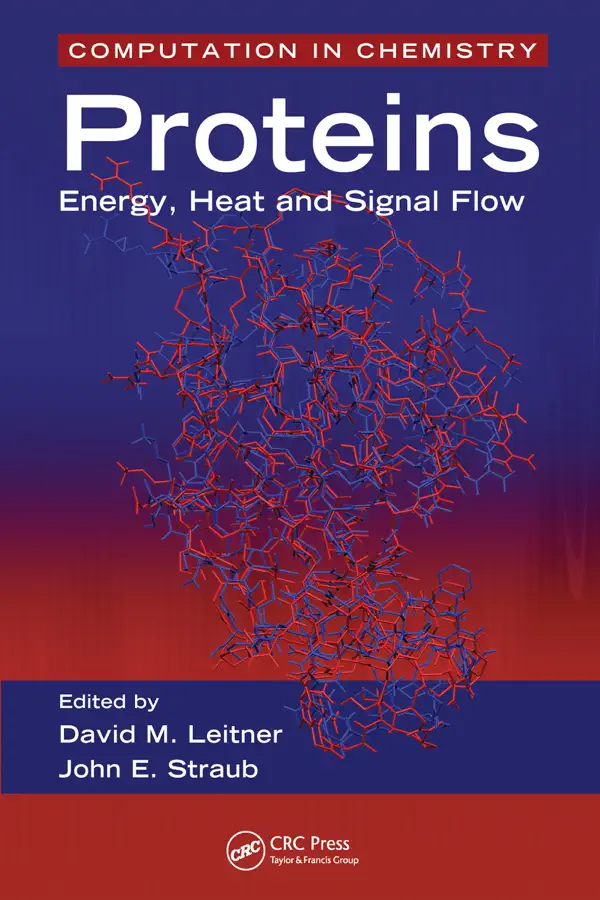
Proteins
David M. Leitner & John E. Straub
Turn its ideas into short, game-like lessons you’ll actually finish.
About Proteins
Computational modeling can provide a wealth of insight into how energy flow in proteins mediates protein function. Computational methods can also address fundamental questions related to molecular signaling and energy flow in proteins. Proteins: Energy, Heat and Signal Flow presents state-of-the-art computational strategies for studying energy redi
A smarter reading
and learning experience.
Hooked from page one.Every lesson opens on a question you want to answer, so your mind stays on it instead of drifting off.

Get it in seconds.Right after you answer, a few plain words show why. No dense chapters to push through.
Use it this week.Pick the moment you’ll use the idea in your own life, so it turns into a habit, not a highlight.
Questions about Proteins
What is Proteins about?
Computational modeling can provide a wealth of insight into how energy flow in proteins mediates protein function. Computational methods can also address fundamental questions related to molecular signaling and energy flow in proteins.
Who wrote Proteins?
David M. Leitner & John E. Straub wrote Proteins.
Is there a summary of Proteins?
MEMRBL doesn’t summarize it. It turns its ideas into short lessons on your iPhone: you guess first, see why, and plan where you’ll use each idea this week.
How do I remember what I read in Proteins?
Answer questions about it instead of reading it again. Recalling an idea makes it stick better than rereading it (Pan and Sana, 2021). That is how every MEMRBL lesson works.
What books are like Proteins?
The Vital Question, Scale and Your Inner Fish. See all books like Proteins.
Books like Proteins
See all


Explore more books
Put Proteins to work.
Short lessons on your iPhone. Free to download.