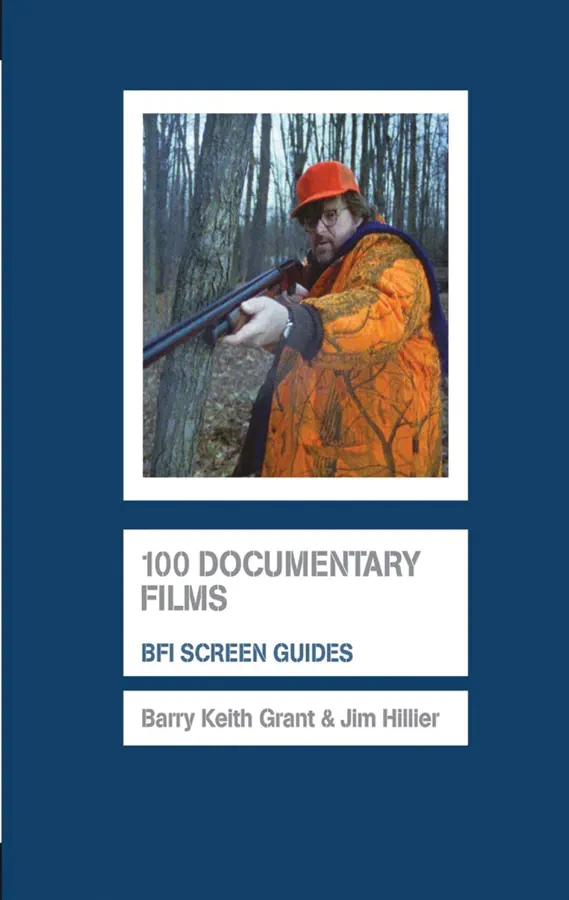
100 Documentary Films
Barry Keith Grant & Jim Hillier
Turn its ideas into short, game-like lessons you’ll actually finish.
About 100 Documentary Films
Documentary films constitute a major part of film history. Cinema's origins lie, arguably, more in non-fiction than fiction, and documentary represents the other - often submerged and barely visible - 'half' of cinema history. Historically, documentary cinema has always been an important point of reference for fiction cinema, and the two have often overlapped. Over the last two decades, documentary cinema has enjoyed a revival in critical and commercial success.
100 Documentary Films is the first book to offer concise and authoritative individual critical commentaries on some of the key documentary films - from the Lumière brothers and the beginnings of cinema through to recent films such as Bowling for Columbine and When the Levees Broke - and is global in perspective. Many different types of documentary are discussed, as well as films by major documentary directors, including Robert Flaherty, Humphrey Jennings, Jean Rouch, Dziga Vertov, Errol Morris, Nick Broomfield and Michael Moore. Each entry provides concise critical analysis, while frequent cross reference to other films featured helps to place films in their historical and aesthetic contexts.
Barry Keith Grant is Professor of Film Studies and Popular Culture at Brock University, Ontario, Canada. He is the author of Film Genre: From Iconography to Ideology (2007), Voyages of Discovery: The Cinema of Frederick Wiseman (1992) and co-author, with Steve Blandford and Jim Hillier, of The Film Studies Dictionary (2001).
Jim Hillier is Visiting Lecturer in Film at the University of Reading. He is the author of The New Hollywood (1993), the co-author of The Film Studies Dictionary (2001) and, with Alan Lovell, of Studies in Documentary (1972). His edited books include American Independent Cinema (2001) and two volumes of the English translation of the selected Cahiers du cinema (1985, 1986).
A smarter reading
and learning experience.
Hooked from page one.Every lesson opens on a question you want to answer, so your mind stays on it instead of drifting off.

Get it in seconds.Right after you answer, a few plain words show why. No dense chapters to push through.

Use it this week.Pick the moment you’ll use the idea in your own life, so it turns into a habit, not a highlight.

Questions about 100 Documentary Films
What is 100 Documentary Films about?
Documentary films constitute a major part of film history. Cinema's origins lie, arguably, more in non-fiction than fiction, and documentary represents the other - often submerged and barely visible - 'half' of cinema history.
Who wrote 100 Documentary Films?
Barry Keith Grant & Jim Hillier wrote 100 Documentary Films.
Is there a summary of 100 Documentary Films?
MEMRBL doesn’t summarize it. It turns its ideas into short lessons on your iPhone: you guess first, see why, and plan where you’ll use each idea this week.
How do I remember what I read in 100 Documentary Films?
Answer questions about it instead of reading it again. Recalling an idea makes it stick better than rereading it (Pan and Sana, 2021). That is how every MEMRBL lesson works.
What books are like 100 Documentary Films?
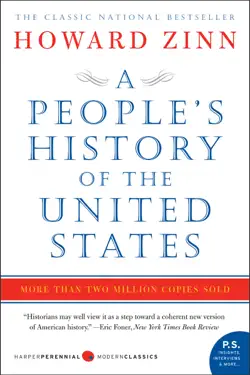
A History of the World in 100 Objects, A People's History of the United States and An Indigenous Peoples' History of the United States. See all books like 100 Documentary Films.
Books like 100 Documentary Films
See all


Explore more books
Put 100 Documentary Films to work.
Short lessons on your iPhone. Free to download.