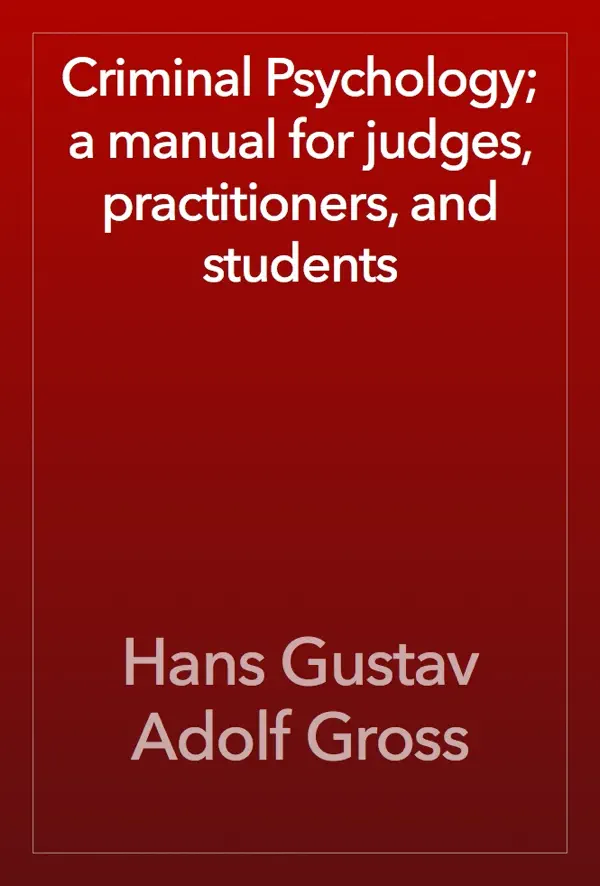
Criminal Psychology; a manual for judges, practitioners, and…
Hans Gustav Adolf Gross
Rated 4.0 from 11 ratings on Apple Books
Turn its ideas into short, game-like lessons you’ll actually finish.
About Criminal Psychology; a manual for judges, practitioners, and students
It realizes the necessity of educating the professions and the public by the wide diffusion of information on this subject. It desires here to explain the considerations which have moved it in seeking to select the treatises best adapted to the purpose. For the community at large, it is important to recognize that criminal science is a larger thing than criminal law. The legal profession in particular has a duty to familiarize itself with the principles of that science, as the sole means for intelligent and systematic improvement of the criminal law.
A smarter reading
and learning experience.
Hooked from page one.Every lesson opens on a question you want to answer, so your mind stays on it instead of drifting off.
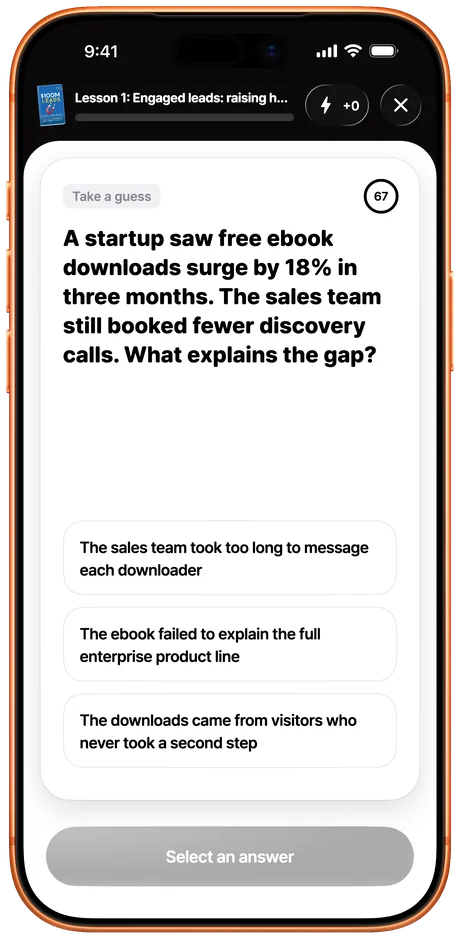
Get it in seconds.Right after you answer, a few plain words show why. No dense chapters to push through.
Use it this week.Pick the moment you’ll use the idea in your own life, so it turns into a habit, not a highlight.
Questions about Criminal Psychology; a manual for judges, practitioners, and students
What is Criminal Psychology; a manual for judges, practitioners, and students about?
It realizes the necessity of educating the professions and the public by the wide diffusion of information on this subject. It desires here to explain the considerations which have moved it in seeking to select the treatises best adapted to the purpose.
Who wrote Criminal Psychology; a manual for judges, practitioners, and students?
Hans Gustav Adolf Gross wrote Criminal Psychology; a manual for judges, practitioners, and students.
Is Criminal Psychology; a manual for judges, practitioners, and students worth reading?
Readers on Apple Books rate it 4.0 out of 5, from 11 ratings.
Is there a summary of Criminal Psychology; a manual for judges, practitioners, and students?
MEMRBL doesn’t summarize it. It turns its ideas into short lessons on your iPhone: you guess first, see why, and plan where you’ll use each idea this week.
How do I remember what I read in Criminal Psychology; a manual for judges, practitioners, and students?
Answer questions about it instead of reading it again. Recalling an idea makes it stick better than rereading it (Pan and Sana, 2021). That is how every MEMRBL lesson works.
What books are like Criminal Psychology; a manual for judges, practitioners, and students?
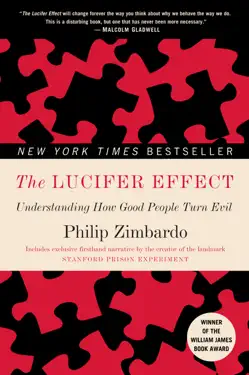
The Lucifer Effect, The Hidden Brain and Mistakes Were Made. See all books like Criminal Psychology; a manual for judges, practitioners, and students.
Books like Criminal Psychology; a manual for judges, practitioners, and students
See all


Explore more books
Put Criminal Psychology; a manual for judges, practitioners, and students to work.
Short lessons on your iPhone. Free to download.