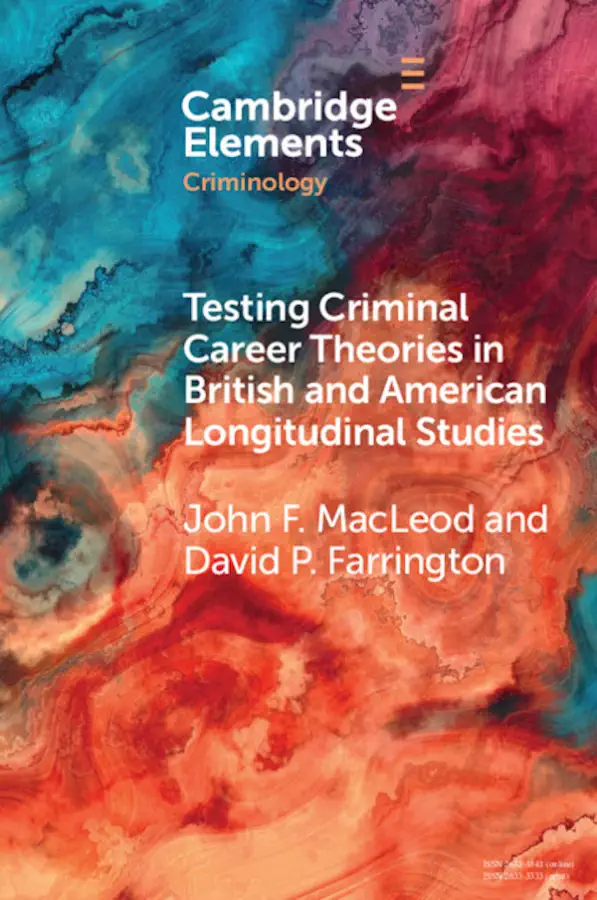
Testing Criminal Career Theories in British and American…
John F. MacLeod & David P. Farrington
Turn its ideas into short, game-like lessons you’ll actually finish.
About Testing Criminal Career Theories in British and American Longitudinal Studies
Most criminological theories are not truly scientific, since they do not yield exact quantitative predictions of criminal career features, such as the prevalence and frequency of offending at different ages. This Element aims to make progress towards more scientific criminological theories. A simple theory is described, based on measures of the probability of reoffending and the frequency of offending. Three offender categories are identified: high risk/high rate, high risk/low rate, and low risk/low rate. It is demonstrated that this theory accurately predicts key criminal career features in three datasets: in England the Offenders Index (national data), the Cambridge Study in Delinquent Development (CSDD) and in America the Pittsburgh Youth Study (PYS). The theory is then extended in the CSDD and PYS by identifying early risk factors that predict the three categories. Criminological theorists are encouraged to replicate and build on our research to develop scientific theories that yield quantitative predictions.
A smarter reading
and learning experience.
Hooked from page one.Every lesson opens on a question you want to answer, so your mind stays on it instead of drifting off.



Get it in seconds.Right after you answer, a few plain words show why. No dense chapters to push through.

Use it this week.Pick the moment you’ll use the idea in your own life, so it turns into a habit, not a highlight.

Questions about Testing Criminal Career Theories in British and American Longitudinal Studies
What is Testing Criminal Career Theories in British and American Longitudinal Studies about?
Most criminological theories are not truly scientific, since they do not yield exact quantitative predictions of criminal career features, such as the prevalence and frequency of offending at different ages.
Who wrote Testing Criminal Career Theories in British and American Longitudinal Studies?
John F. MacLeod & David P. Farrington wrote Testing Criminal Career Theories in British and American Longitudinal Studies.
Is there a summary of Testing Criminal Career Theories in British and American Longitudinal Studies?
MEMRBL doesn’t summarize it. It turns its ideas into short lessons on your iPhone: you guess first, see why, and plan where you’ll use each idea this week.
How do I remember what I read in Testing Criminal Career Theories in British and American Longitudinal Studies?
Answer questions about it instead of reading it again. Recalling an idea makes it stick better than rereading it (Pan and Sana, 2021). That is how every MEMRBL lesson works.
What books are like Testing Criminal Career Theories in British and American Longitudinal Studies?
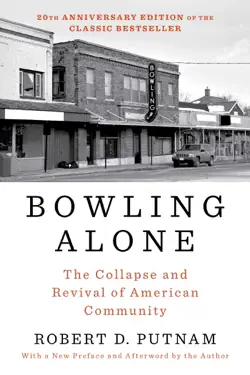
The Sociological Imagination, Bowling Alone and The Blank Slate. See all books like Testing Criminal Career Theories in British and American Longitudinal Studies.
Books like Testing Criminal Career Theories in British and American Longitudinal Studies
See all


Explore more books
Put Testing Criminal Career Theories in British and American Longitudinal Studies to work.
Short lessons on your iPhone. Free to download.