Conscience
Soni Werner
Turn its ideas into short, game-like lessons you’ll actually finish.
About Conscience
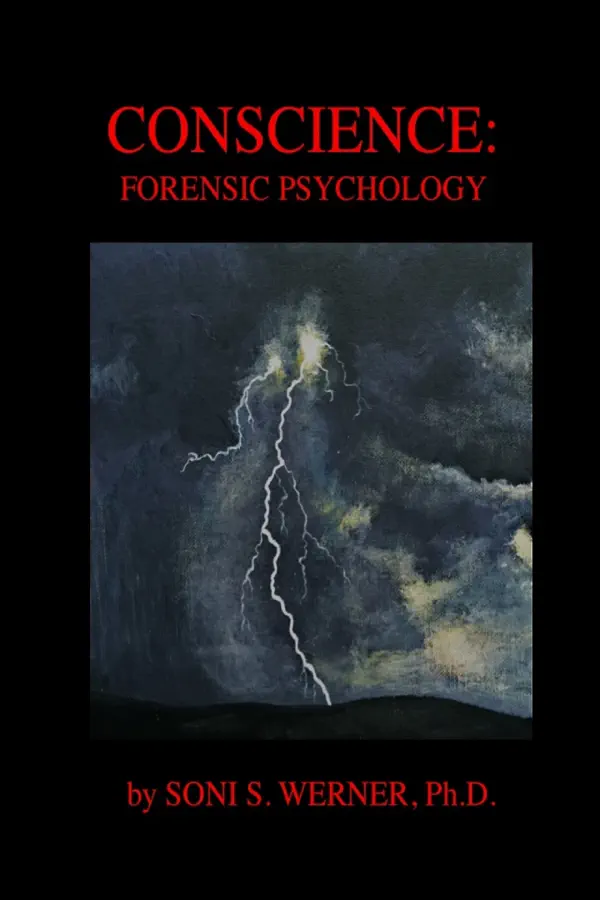
Conscience: Forensic Psychology, by Soni S. Werner, Ph.D. is a textbook for undergraduate college students who are majoring in psychology. It has three main chapters focusing on the prevention, intervention and rehabilitation of criminals. Within each chapter are three perspectives, including a physiological view of the conscience, social influences on the conscience, and a spiritual view of the conscience. This relatively short textbook is designed to give an overview of some of the latest scholarly research in forensic psychology as reported in professional, peer-reviewed journals up to 2015. Werner briefly summarizes over 100 scholarly sources from the fields of neuroscience, psychiatry, psychology, law, sociology, criminology, neurolaw, and theology. Most of the references are to evidence-based research studies on various aspects of forensic psychology. Students who read this eBook will have the chance to see the wide range of issues that current forensic psychologists handle in their profession. In the prevention chapter, Werner provides summaries of research on the most effective ways to prevent children and adolescents from becoming criminals, including both a physiological view of the brain and a review of the main social influences on the conscience. In the intervention chapter, (in the physiological section) Werner describes the latest methods for measuring the abnormal brains of young offenders of the law who appear calloused while harming other people or property. In addition, Werner highlights many of the most effective social programs in the world designed to strengthen the consciences of young delinquents before they become committed to lifetimes of crime. In the rehabilitation chapter, Werner reviews the duties of forensic psychologists who are called upon to assess adult criminals who are facing the judicial system after getting arrested. In the physiological section of the rehabilitation chapter, there is a summary of neural assessments of the brains of criminals, and how this evidence may be presented in court to determine the offenders' innocence or guilt. In the section highlighting social influences on the conscience, Werner discusses methods for detecting deception, presenting eyewitness accounts, determining guilt, and offering therapy to criminals. At the end of each of the three major chapters, there is a subsection called the spiritual view of the conscience. This is included to provide a contrast to the civil and moral views of criminals. These spiritual subsections of the three chapters are all inspired by the works of the theologian, Emanuel Swedenborg. He wrote dozens of theological works in the 18th century in Europe, and these doctrinal ideas provide insight into the spiritual growth of human beings. He also had mystical experiences and then described the afterlife. Concepts from Swedenborg's works are included in this eBook to provide students with an eternal perspective, because people often wonder what happens to criminals in the afterlife. This Swedenborgian spiritual perspective emphasizes how it is the individual's love of being evil or good that is the most important variable of all. Everyone's major affections are revealed in the afterlife, so people who feel sincere remorse will have the chance to be forgiven and learn how to become positive members of angelic communities. However, those people who really love to be evil will not be able to be hypocritical anymore. It will become obvious to all other angelic spirits that these individuals will be better off in hell. Forensic psychology students who learn about the physiological view of the conscience, the social influences on the conscience, and this spiritual view of the conscience will benefit from this interdisciplinary approach when trying to prevent, intervene, or rehabilitate criminals.
A smarter reading
and learning experience.
Hooked from page one.Every lesson opens on a question you want to answer, so your mind stays on it instead of drifting off.

Get it in seconds.Right after you answer, a few plain words show why. No dense chapters to push through.

Use it this week.Pick the moment you’ll use the idea in your own life, so it turns into a habit, not a highlight.

Questions about Conscience
What is Conscience about?
Conscience: Forensic Psychology, by Soni S. Werner, Ph.D. is a textbook for undergraduate college students who are majoring in psychology. It has three main chapters focusing on the prevention, intervention and rehabilitation of criminals.
Who wrote Conscience?
Soni Werner wrote Conscience.
Is there a summary of Conscience?
MEMRBL doesn’t summarize it. It turns its ideas into short lessons on your iPhone: you guess first, see why, and plan where you’ll use each idea this week.
How do I remember what I read in Conscience?
Answer questions about it instead of reading it again. Recalling an idea makes it stick better than rereading it (Pan and Sana, 2021). That is how every MEMRBL lesson works.
What books are like Conscience?
The Wisdom of Psychopaths, The Molecule of More and Psychology A Complete Course. See all books like Conscience.
Books like Conscience
See all


Explore more books
Put Conscience to work.
Short lessons on your iPhone. Free to download.