VLSI
Tomasz Wojcicki
Turn its ideas into short, game-like lessons you’ll actually finish.
About VLSI
Recently the world celebrated the 60th anniversary of the invention of the first transistor. The first integrated circuit (IC) was built a decade later, with the first microprocessor designed in the early 1970s. Today, ICs are a part of nearly every aspect of our daily lives. They help us live longer and more comfortably, and do more, faster. All this is possible because of the relentless search for new materials, circuit designs, and ideas happening on a daily basis at industrial and academic institutions around the globe.
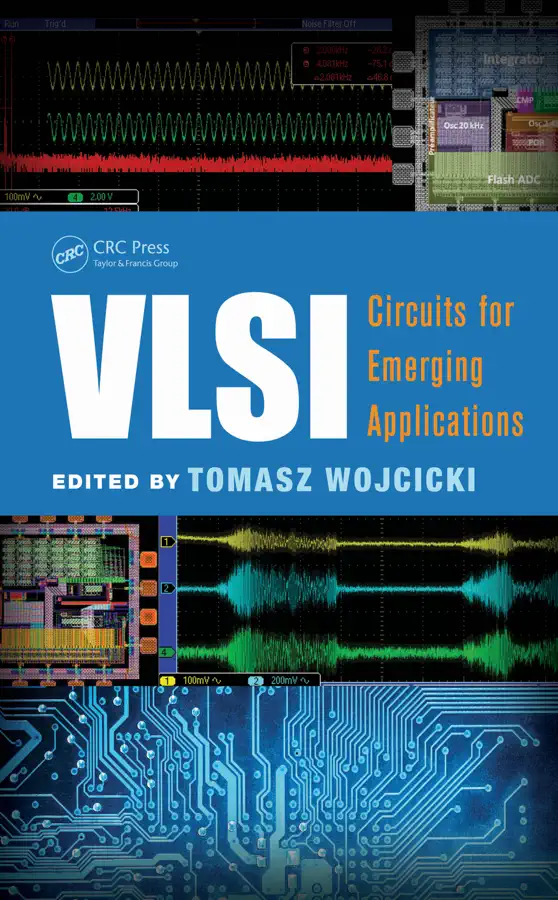
Showcasing the latest advances in very-large-scale integrated (VLSI) circuits, VLSI: Circuits for Emerging Applications provides a balanced view of industrial and academic developments beyond silicon and complementary metal–oxide–semiconductor (CMOS) technology. From quantum-dot cellular automata (QCA) to chips for cochlear implants, this must-have resource: Investigates the trend of combining multiple cores in a single chip to boost performance of the overall system Describes a novel approach to enable physically unclonable functions (PUFs) using intrinsic features of a VLSI chip Examines the VLSI implementations of major symmetric and asymmetric key cryptographic algorithms, hash functions, and digital signatures Discusses nonvolatile memories such as resistive random-access memory (Re-RAM), magneto-resistive RAM (MRAM), and floating-body RAM (FB-RAM) Explores organic transistors, soft errors, photonics, nanoelectromechanical (NEM) relays, reversible computation, bioinformatics, asynchronous logic, and more VLSI: Circuits for Emerging Applications presents cutting-edge research, design architectures, materials, and uses for VLSI circuits, offering valuable insight into the current state of the art of micro- and nanoelectronics.
A smarter reading
and learning experience.
Hooked from page one.Every lesson opens on a question you want to answer, so your mind stays on it instead of drifting off.
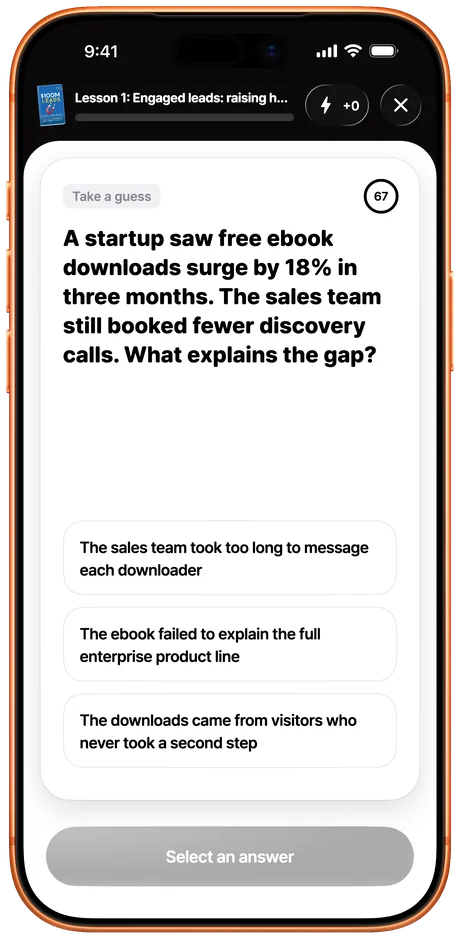
Get it in seconds.Right after you answer, a few plain words show why. No dense chapters to push through.

Use it this week.Pick the moment you’ll use the idea in your own life, so it turns into a habit, not a highlight.

Questions about VLSI
What is VLSI about?
Recently the world celebrated the 60th anniversary of the invention of the first transistor. The first integrated circuit (IC) was built a decade later, with the first microprocessor designed in the early 1970s.
Who wrote VLSI?
Tomasz Wojcicki wrote VLSI.
Is there a summary of VLSI?
MEMRBL doesn’t summarize it. It turns its ideas into short lessons on your iPhone: you guess first, see why, and plan where you’ll use each idea this week.
How do I remember what I read in VLSI?
Answer questions about it instead of reading it again. Recalling an idea makes it stick better than rereading it (Pan and Sana, 2021). That is how every MEMRBL lesson works.
What books are like VLSI?
Nanoelectronics for Next-Generation Integrated Circuits, Nanoscale VLSI and Emerging Nanotechnologies. See all books like VLSI.
Books like VLSI
See all