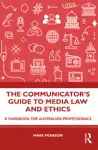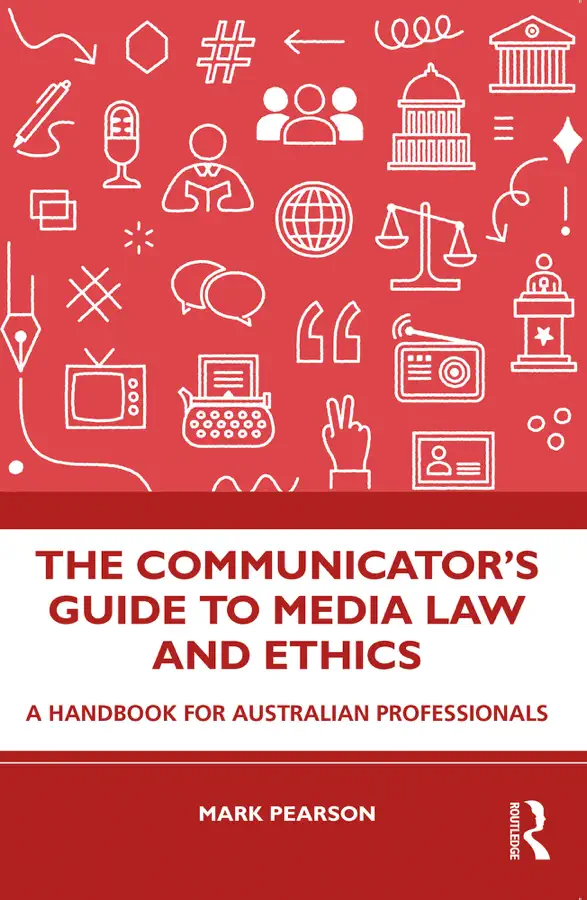
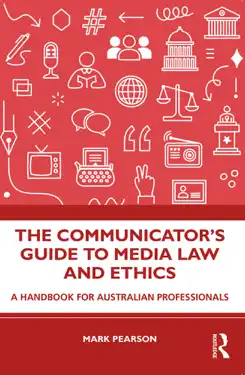
The Communicator's Guide to Media Law and Ethics
Mark Pearson
Turn its ideas into short, game-like lessons you’ll actually finish.
About The Communicator's Guide to Media Law and Ethics
This book offers an introduction to the key legal and ethical topics confronting Australian journalists and strategic communicators both at home and internationally and offers a suite of reflective techniques for navigating them. It starts by positioning morals, ethics, and the law in their historical and philosophical frameworks by tracing the evolution of free expression and professional media ethics. Media law and ethics are then contextualized in their modern international human rights framework.
Readers are equipped with a skill set for reflecting on the law and ethics of professional media dilemmas – including mindful reflection, the Potter Box, journaling, concept mapping, and discussion. Such approaches are then applied to key topic areas, including free expression; reputation; confidentiality; privacy; justice; intellectual property; national security; discrimination and harassment; and conflicted interests. Each is examined in terms of its philosophical underpinnings, relationship to human rights, professional ethical context, international examples, legal principles, key Australian laws, legal cases, and strategies for applying reflective practice techniques. It concludes on a confident note – imploring communicators to engage in constructive and mindful strategic communication with the authority and confidence that results from a working knowledge of media law and ethics.
This handbook is for professional communicators and students in all fields, but particularly in journalism, public relations, corporate communication, media relations, and marketing.
A smarter reading
and learning experience.
Hooked from page one.Every lesson opens on a question you want to answer, so your mind stays on it instead of drifting off.

Get it in seconds.Right after you answer, a few plain words show why. No dense chapters to push through.

Use it this week.Pick the moment you’ll use the idea in your own life, so it turns into a habit, not a highlight.

Questions about The Communicator's Guide to Media Law and Ethics
What is The Communicator's Guide to Media Law and Ethics about?
This book offers an introduction to the key legal and ethical topics confronting Australian journalists and strategic communicators both at home and internationally and offers a suite of reflective techniques for navigating them.
Who wrote The Communicator's Guide to Media Law and Ethics?
Mark Pearson wrote The Communicator's Guide to Media Law and Ethics.
Is there a summary of The Communicator's Guide to Media Law and Ethics?
MEMRBL doesn’t summarize it. It turns its ideas into short lessons on your iPhone: you guess first, see why, and plan where you’ll use each idea this week.
How do I remember what I read in The Communicator's Guide to Media Law and Ethics?
Answer questions about it instead of reading it again. Recalling an idea makes it stick better than rereading it (Pan and Sana, 2021). That is how every MEMRBL lesson works.
What books are like The Communicator's Guide to Media Law and Ethics?
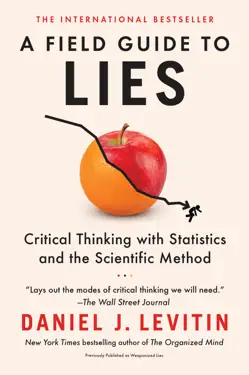
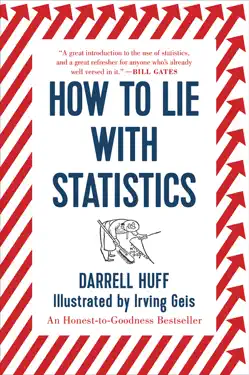
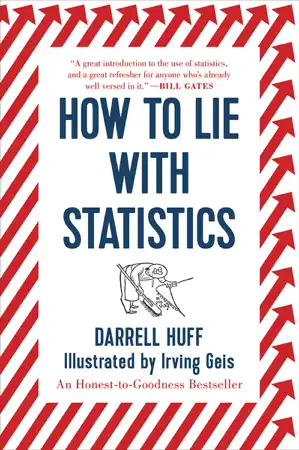
Thank You for Arguing, A Field Guide to Lies and How to Lie With Statistics. See all books like The Communicator's Guide to Media Law and Ethics.
Books like The Communicator's Guide to Media Law and Ethics
See all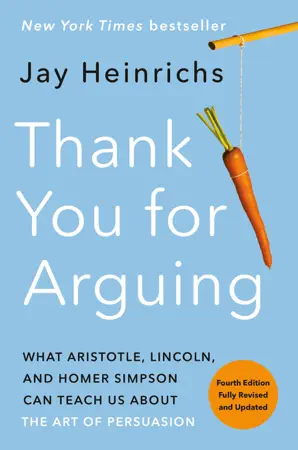



Explore more books
Put The Communicator's Guide to Media Law and Ethics to work.
Short lessons on your iPhone. Free to download.