Practical Quantum Computing for Developers
Vladimir Silva
Turn its ideas into short, game-like lessons you’ll actually finish.
About Practical Quantum Computing for Developers
Write algorithms and program in the new field of quantum computing. This book covers major topics such as the physical components of a quantum computer: qubits, entanglement, logic gates, circuits, and how they differ from a traditional computer. Also, Practical Quantum Computing for Developers discusses quantum computing in the cloud using IBM Q Experience including: the composer, quantum scores, experiments, circuits, simulators, real quantum devices, and more. You’ll be able to run experiments in the cloud on a real quantum device. Furthermore, this book shows you how to do quantum programming using the QISKit (Quantum Information Software Kit), Python SDK, and other APIs such as QASM (Quantum Assembly). You’ll learn to write code using these languages and execute it against simulators (local or remote) or a real quantum computer provided by IBM’s Q Experience. Finally, you’ll learn the current quantum algorithms for entanglement,random number generation, linear search, integer factorization, and others. You’ll peak inside the inner workings of the Bell states for entanglement, Grover’s algorithm for linear search, Shor’s algorithm for integer factorization, and other algorithms in the fields of optimization, and more. Along the way you’ll also cover game theory with the Magic Square, an example of quantum pseudo-telepathy where parties sharing entangled states can be observed to have some kind of communication between them. In this game Alice and Bob play against a referee. Quantum mechanics allows Alice and Bob to always win! By the end of this book, you will understand how this emerging technology provides massive parallelism and significant computational speedups over classical computers, and will be prepared to program quantum computers which are expected to replace traditional computers in the data center. You will:Use the Q Experience Composer, the first-of-its-kind web console to create visual programs/experiments and submit them to a quantum simulator or real device on the cloud Run programs remotely using the Q Experience REST API Write algorithms that provide superior performance over their classical counterparts Build a Node.js REST client for authenticating, listing remote devices, querying information about quantum processors, and listing or running experiments remotely in the cloud Create a quantum number generator: The quintessential coin flip with a quantum twist Discover quantum teleportation: This algorithm demonstrates how the exact state of a qubit (quantum information) can be transmitted from one location to another, with the help of classical communication and quantum entanglement between the sender and receiver Peek into single qubit operations with the classic game of Battleships with a quantum twist Handle the counterfeit coin problem: a classic puzzle that consists of finding a counterfeit coin in a beam balance among eight coins in only two turns
A smarter reading
and learning experience.
Hooked from page one.Every lesson opens on a question you want to answer, so your mind stays on it instead of drifting off.
Get it in seconds.Right after you answer, a few plain words show why. No dense chapters to push through.

Use it this week.Pick the moment you’ll use the idea in your own life, so it turns into a habit, not a highlight.
Questions about Practical Quantum Computing for Developers
What is Practical Quantum Computing for Developers about?
Write algorithms and program in the new field of quantum computing. This book covers major topics such as the physical components of a quantum computer: qubits, entanglement, logic gates, circuits, and how they differ from a traditional computer.
Who wrote Practical Quantum Computing for Developers?
Vladimir Silva wrote Practical Quantum Computing for Developers.
Is there a summary of Practical Quantum Computing for Developers?
MEMRBL doesn’t summarize it. It turns its ideas into short lessons on your iPhone: you guess first, see why, and plan where you’ll use each idea this week.
How do I remember what I read in Practical Quantum Computing for Developers?
Answer questions about it instead of reading it again. Recalling an idea makes it stick better than rereading it (Pan and Sana, 2021). That is how every MEMRBL lesson works.
What books are like Practical Quantum Computing for Developers?
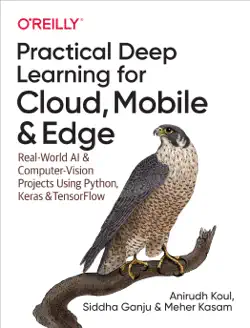
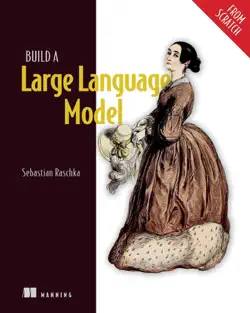
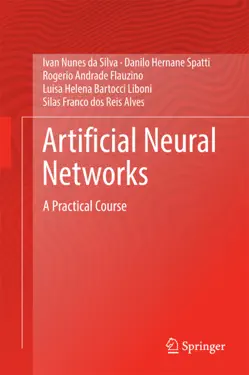
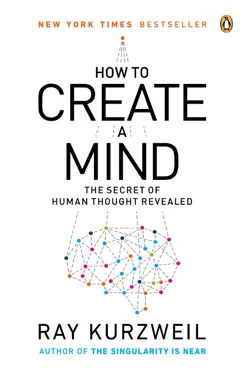
Quantum Machine Learning, The Singularity Is Near and Practical Deep Learning for Cloud, Mobile, and Edge. See all books like Practical Quantum Computing for Developers.
Books like Practical Quantum Computing for Developers
See all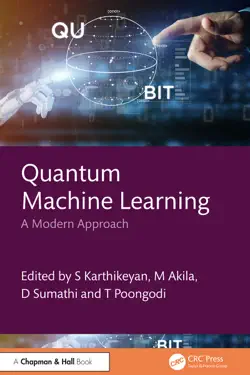


Explore more books
Put Practical Quantum Computing for Developers to work.
Short lessons on your iPhone. Free to download.