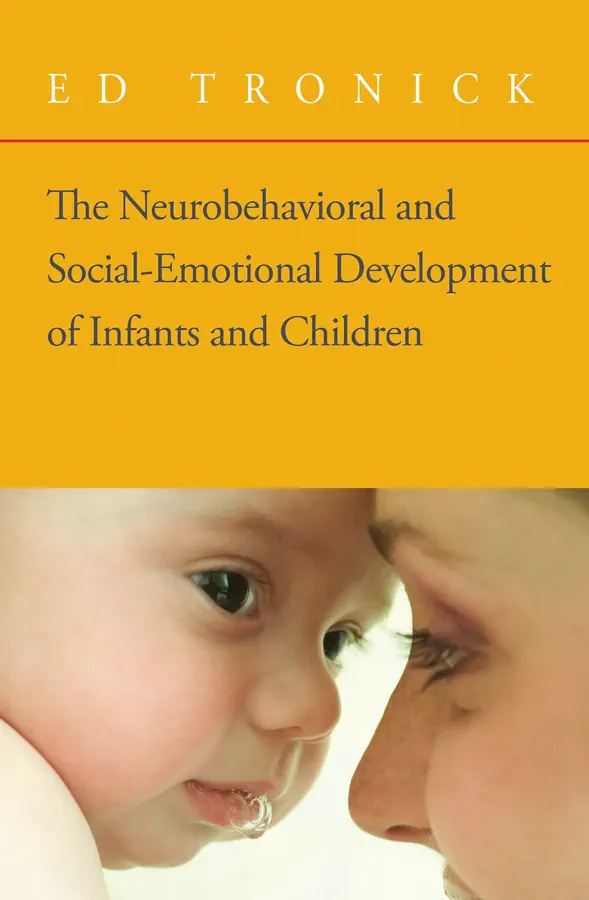
The Neurobehavioral and Social-Emotional Development of…
Ed Tronick
Turn its ideas into short, game-like lessons you’ll actually finish.
About The Neurobehavioral and Social-Emotional Development of Infants and Children
Internationally recognized as one of the premier researchers on child development, Ed Tronick has held notable teaching positions and conducted vital research for nearly 30 years.
Over the course of his esteemed career, he has received funding for hundreds of key studies in the US and abroad on normal and abnormal infant and child development—including his Mutual Regulation Model and Still-Face Paradigm, which revolutionized our understanding of infants’ emotional capacities and coping—all of which led to critical contributions in the field. Much of his work serves as the benchmark for how mental health clinicians think about biopsychosocial states of consciousness, the process of meaning making, and how and why we engage with others in the world.
Now, for the first time, Tronick has gathered together his most influential writings in a single, essential volume. Organized into five parts—(I) Neurobehavior, (II) Culture, (III) Infant Social-Emotional Interaction, (IV) Perturbations: Natural and Experimental, and (V) Dyadic Expansion of Consciousness and Meaning Making—this book represents his major ideas and studies regarding infant-adult interactions, developmental processes, and mutual regulation, carefully addressing such questions as:
What is a state of consciousness? What are the developing infant’s capacities for neurobehavioral self-organization? How are early infant-adult interactions organized? How can we understand the nature of normal versus abnormal development? How do self and mutual regulation relate to developmental processes? Is meaning making purely a function of the brain, or is it in our bodies as well?
As a bonus, the book includes a DVD-ROM, with video clips of Tronick’s Still-Face Paradigm, an invaluable teaching aid.
A smarter reading
and learning experience.
Hooked from page one.Every lesson opens on a question you want to answer, so your mind stays on it instead of drifting off.
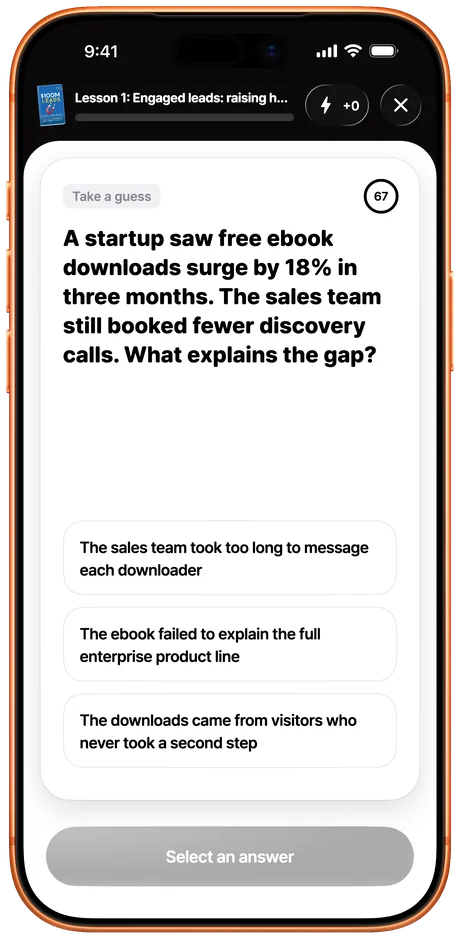
Get it in seconds.Right after you answer, a few plain words show why. No dense chapters to push through.

Use it this week.Pick the moment you’ll use the idea in your own life, so it turns into a habit, not a highlight.
Questions about The Neurobehavioral and Social-Emotional Development of Infants and Children
What is The Neurobehavioral and Social-Emotional Development of Infants and Children about?
Internationally recognized as one of the premier researchers on child development, Ed Tronick has held notable teaching positions and conducted vital research for nearly 30 years.
Who wrote The Neurobehavioral and Social-Emotional Development of Infants and Children?
Ed Tronick wrote The Neurobehavioral and Social-Emotional Development of Infants and Children.
Is there a summary of The Neurobehavioral and Social-Emotional Development of Infants and Children?
MEMRBL doesn’t summarize it. It turns its ideas into short lessons on your iPhone: you guess first, see why, and plan where you’ll use each idea this week.
How do I remember what I read in The Neurobehavioral and Social-Emotional Development of Infants and Children?
Answer questions about it instead of reading it again. Recalling an idea makes it stick better than rereading it (Pan and Sana, 2021). That is how every MEMRBL lesson works.
What books are like The Neurobehavioral and Social-Emotional Development of Infants and Children?
The Boy Who Was Raised as a Dog, The Body Keeps the Score and The Biology of Early Life Stress. See all books like The Neurobehavioral and Social-Emotional Development of Infants and Children.
Books like The Neurobehavioral and Social-Emotional Development of Infants and Children
See all


Explore more books
Put The Neurobehavioral and Social-Emotional Development of Infants and Children to work.
Short lessons on your iPhone. Free to download.