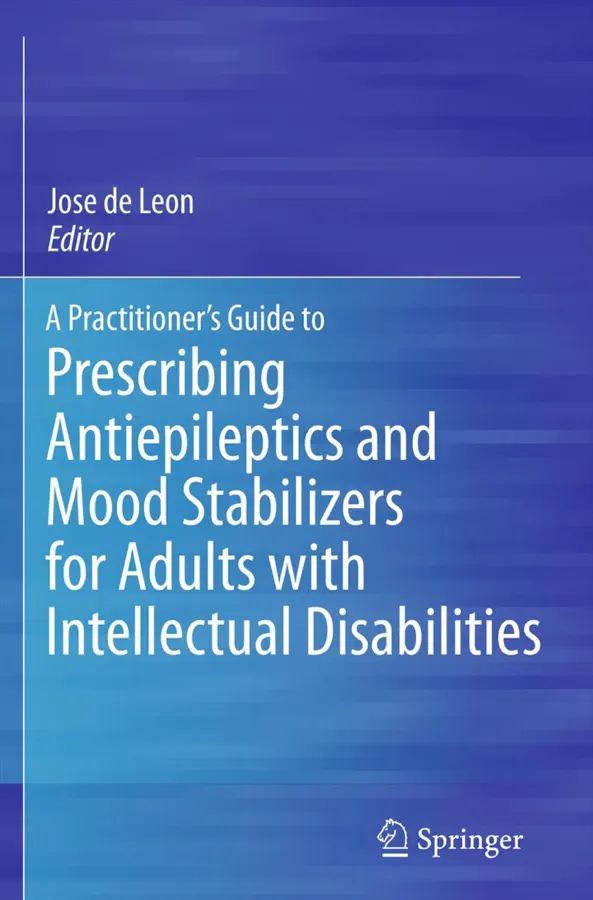
A Practitioner's Guide to Prescribing Antiepileptics and Mood…
Jose de Leon
Turn its ideas into short, game-like lessons you’ll actually finish.
About A Practitioner's Guide to Prescribing Antiepileptics and Mood Stabilizers for Adults with Intellectual Disabilities
Emotional, behavioral, and neuropsychiatric conditions are common in individuals with intellectual disabilities (IDs), most notably epilepsy, aggression, self-injurious behaviors, and bipolar and other mood disorders. Despite the prevalence of such problems, there is a scarcity in the literature of reliable information on medical treatments for those with IDs.
A Practitioner's Guide to Prescribing Antiepileptics and Mood Stabilizers for Adults with Intellectual Disabilities provides a detailed framework for prescribing for this challenging population. Featuring the most up-to-date information on factors that inform prescribing, the Guide addresses basic issues and controversies (e.g., the rift between evidence-based and personalized medicine) in treating adults with cognitive deficits. Clients' specific needs are emphasized in developing appropriate and effective pharmacological intervention for improved outcomes and quality of life. Drugs discussed in the Guide include carbamazepine, clonazepam, diazepam, ethosuximide, felbamate, gabapentin, lacosamide, lamotrigine, levetiracetam, lithium, lorazepam, oxcarbazepine, phenobarbital, phenytoin, pregabalin, primidone, rufinamide, tiagabine, topiramate, valproate, and zonisamide. For each of these compounds, the guidelines cover: Indications for use; relative and absolute contraindications.Assessment during treatment; therapeutic drug monitoring; warning signs and symptoms for caretakers.Dosage: administration; initial and maximum recommended dosage; modifications associated with drug-drug interactions, personal characteristics, and (where appropriate) genetic variations.Adverse drug reactions: common, relatively uncommon, and potentially lethal, plus risk of metabolic syndrome.Guidelines for discontinuation.References, tables, and drug utilization reviews. A Practitioner's Guide to PrescribingAntiepileptics and Mood Stabilizers for Adults with Intellectual Disabilities is an indispensable decision-making reference for psychiatrists, neuropsychologists, psychopharmacologists, neurologists, internists, and clinical psychologists.
A smarter reading
and learning experience.
Hooked from page one.Every lesson opens on a question you want to answer, so your mind stays on it instead of drifting off.


Get it in seconds.Right after you answer, a few plain words show why. No dense chapters to push through.

Use it this week.Pick the moment you’ll use the idea in your own life, so it turns into a habit, not a highlight.
Questions about A Practitioner's Guide to Prescribing Antiepileptics and Mood Stabilizers for Adults with Intellectual Disabilities
What is A Practitioner's Guide to Prescribing Antiepileptics and Mood Stabilizers for Adults with Intellectual Disabilities about?
Emotional, behavioral, and neuropsychiatric conditions are common in individuals with intellectual disabilities (IDs), most notably epilepsy, aggression, self-injurious behaviors, and bipolar and other mood disorders.
Who wrote A Practitioner's Guide to Prescribing Antiepileptics and Mood Stabilizers for Adults with Intellectual Disabilities?
Jose de Leon wrote A Practitioner's Guide to Prescribing Antiepileptics and Mood Stabilizers for Adults with Intellectual Disabilities.
Is there a summary of A Practitioner's Guide to Prescribing Antiepileptics and Mood Stabilizers for Adults with Intellectual Disabilities?
MEMRBL doesn’t summarize it. It turns its ideas into short lessons on your iPhone: you guess first, see why, and plan where you’ll use each idea this week.
How do I remember what I read in A Practitioner's Guide to Prescribing Antiepileptics and Mood Stabilizers for Adults with Intellectual Disabilities?
Answer questions about it instead of reading it again. Recalling an idea makes it stick better than rereading it (Pan and Sana, 2021). That is how every MEMRBL lesson works.
What books are like A Practitioner's Guide to Prescribing Antiepileptics and Mood Stabilizers for Adults with Intellectual Disabilities?
Why Zebras Don't Get Ulcers, Brain Lock and Becoming Mindful. See all books like A Practitioner's Guide to Prescribing Antiepileptics and Mood Stabilizers for Adults with Intellectual Disabilities.
Books like A Practitioner's Guide to Prescribing Antiepileptics and Mood Stabilizers for Adults with Intellectual Disabilities
See all


Explore more books
Put A Practitioner's Guide to Prescribing Antiepileptics and Mood Stabilizers for Adults with Intellectual Disabilities to work.
Short lessons on your iPhone. Free to download.