Design of Arithmetic Circuits in Quantum Dot Cellular Automata…
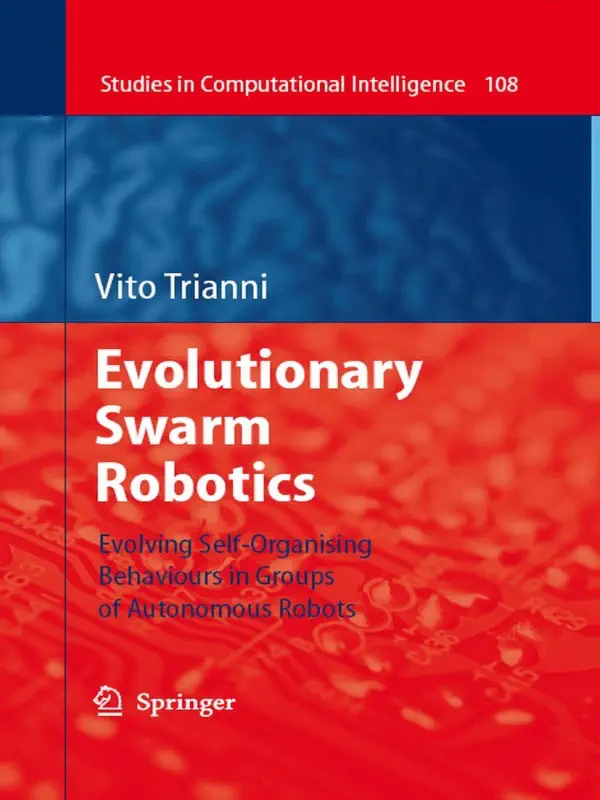
Vito Trianni
Turn its ideas into short, game-like lessons you’ll actually finish.
About Design of Arithmetic Circuits in Quantum Dot Cellular Automata Nanotechnology
In this book the use of ER techniques for the design of self-organising group behaviours, for both simulated and real robots is introduced. This research has a twofold value. From an engineering perspective, an automatic methodology for synthesising complex behaviours in a robotic system is described.
ER techniques should be used in order to obtain robust and efficient group behaviours based on self-organisation. From a more theoretical point of view, the second important contribution brought forth by the author's experiments concerns the understanding of the basic principles underlying self-organising behaviours and collective intelligence. In this experimental work, the evolved behaviours are analysed in order to uncover the mechanisms that have led to a certain organisation.
In summary, this book tries to mediate between two apparently opposed perspectives: engineering and cognitive science. The experiments presented and the results obtained contribute to the assessment of ER not only as a design tool, but also as a methodology for modelling and understanding intelligent adaptive behaviours.
A smarter reading
and learning experience.
Hooked from page one.Every lesson opens on a question you want to answer, so your mind stays on it instead of drifting off.
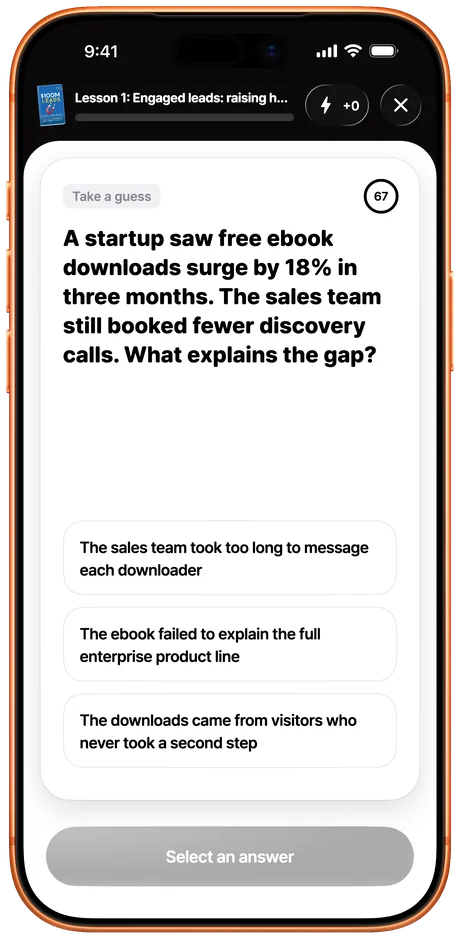
Get it in seconds.Right after you answer, a few plain words show why. No dense chapters to push through.

Use it this week.Pick the moment you’ll use the idea in your own life, so it turns into a habit, not a highlight.

Questions about Design of Arithmetic Circuits in Quantum Dot Cellular Automata Nanotechnology
What is Design of Arithmetic Circuits in Quantum Dot Cellular Automata Nanotechnology about?
In this book the use of ER techniques for the design of self-organising group behaviours, for both simulated and real robots is introduced. This research has a twofold value.
Who wrote Design of Arithmetic Circuits in Quantum Dot Cellular Automata Nanotechnology?
Vito Trianni wrote Design of Arithmetic Circuits in Quantum Dot Cellular Automata Nanotechnology.
Is there a summary of Design of Arithmetic Circuits in Quantum Dot Cellular Automata Nanotechnology?
MEMRBL doesn’t summarize it. It turns its ideas into short lessons on your iPhone: you guess first, see why, and plan where you’ll use each idea this week.
How do I remember what I read in Design of Arithmetic Circuits in Quantum Dot Cellular Automata Nanotechnology?
Answer questions about it instead of reading it again. Recalling an idea makes it stick better than rereading it (Pan and Sana, 2021). That is how every MEMRBL lesson works.
What books are like Design of Arithmetic Circuits in Quantum Dot Cellular Automata Nanotechnology?
Quantum-Dot Cellular Automata Circuits for Nanocomputing Applications, Computing with Multi-Value Logic in Quantum Dot Cellular Automata and VLSI Design. See all books like Design of Arithmetic Circuits in Quantum Dot Cellular Automata Nanotechnology.
Books like Design of Arithmetic Circuits in Quantum Dot Cellular Automata Nanotechnology
See all


Explore more books
Put Design of Arithmetic Circuits in Quantum Dot Cellular Automata Nanotechnology to work.
Short lessons on your iPhone. Free to download.